
Show your users what their DeFi positions are really doing
Most wallets show a balance and stop. Power portfolio balances, LP positions, lending and borrowing, risk alerts and more, from one API.
DeFi Orbit gives wallets the position data a balance cannot show
What wallet teams do with DeFi Orbit
One total for everything a wallet holds
Turn an LP position into something your users can read
Show loan health, not two balances
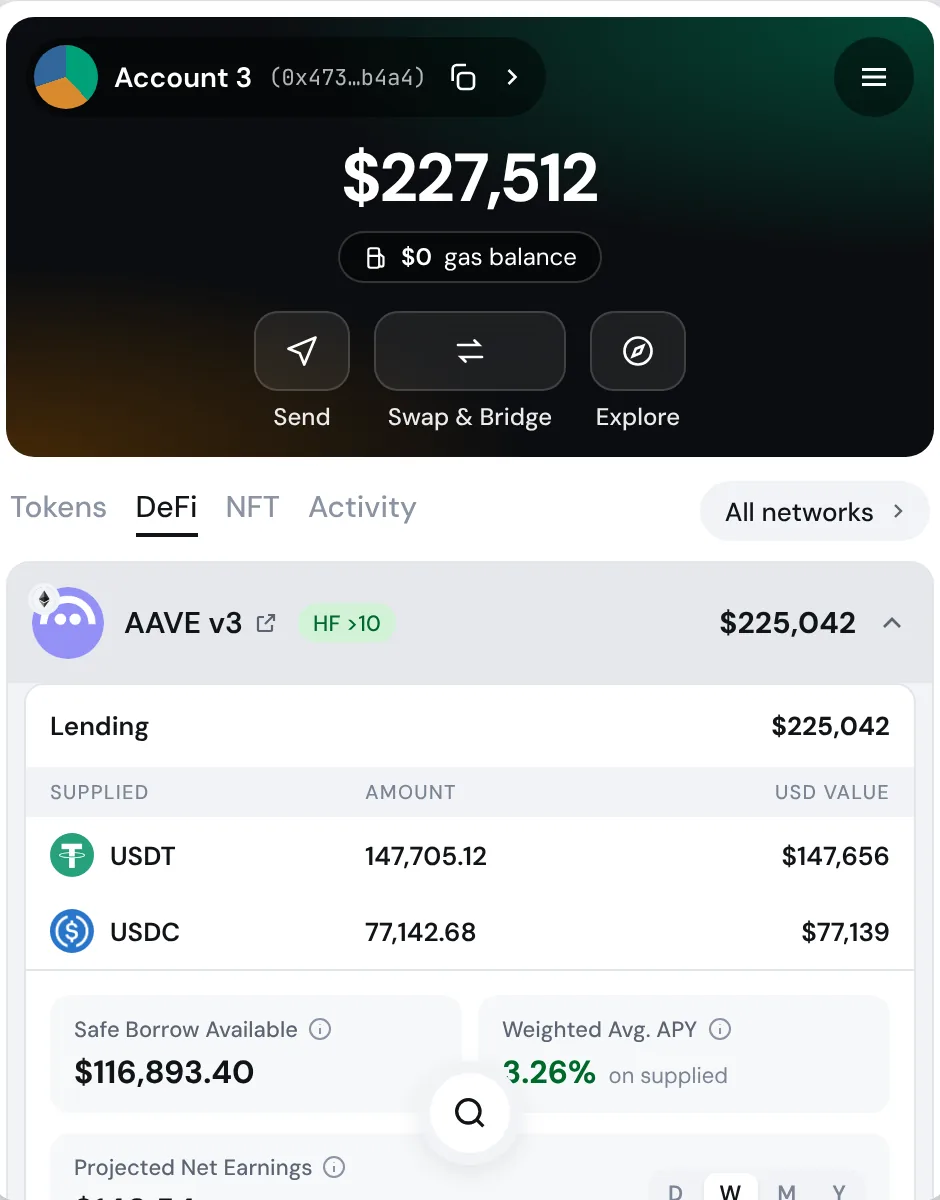
Warn users before they lose money
Show what each position earns
Give every position a chart and a record
Three ways to build your DeFi tab on the API
Everything runs through the API Platform: one key, one credit balance, one schema.
Positions and balances
Render LP positions, loans and token balances in your own design.
Risk checks and alerts
Drive your own push notifications from the same data.
Keys, usage and scale
Operate it in production with full visibility on spend.
 UNUniswap V3
 AEAerodrome
 OROrca
 DTDeFi Tuna
 AAAave
 MOMorpho
 KAKamino
 VFvFat
 RERevert
Questions wallet teams ask
Yes. Each protocol is its own set of endpoints, so you can ship Uniswap V3 or Aave positions in your wallet first and add the others when you’re ready. The response format is the same across protocols, so adding the next one is a small change, not a new integration.
Ethereum, Base, Arbitrum, Optimism, Unichain, Polygon, BNB Smart Chain, Robinhood, Avalanche & Solana. Coverage varies by protocol, so the Supported networks page shows exactly which deployments are live for each one.
Keys start at 5 requests per second, and we raise limits for wallet integrations based on your expected traffic. Live status and incident history are published at status.defiorbit.xyz.
No. The API carries no branding, so position data appears as part of your product. A “Data by DeFi Orbit” credit is welcome but not required.
No. Data is returned in real time from a single HTTPS call, with no indexing or syncing on your side. You can cache responses to fit your refresh interval, and you’re never charged for failed requests.
Not for anything we return. We run the indexers and pay for the RPC calls behind every response, so you make one HTTPS request and get calculated positions back. You only need your own RPC if you’re reading other contracts on top of our data.
Credits are prepaid with a fixed cost per endpoint, so you can model the cost per active user before you ship. For wallet-scale volumes we agree a committed pack and a higher rate limit, with a dedicated contact for your team.